
Active Warrants in Fort Bend County
Warrants in Fort Bend County are issued by judges in the district courts, county courts at law, justice of the peace courts, and municipal courts. The Sheriff's Office and city police carry them out. A warrant can follow a sworn complaint, a grand jury indictment, a missed court date, or an unpaid fine. The Sheriff's Court Security deputies can also arrest a person who appears at the Justice Center with an outstanding warrant.
Fort Bend County does not publish a single active-warrant list online. Warrant data instead shows up in two places: the charge detail of someone booked into the county jail, and the court case file. So a warrant check usually combines a jail inquiry search with a court records search. The Sheriff's information page links the jail inquiry, tips, and other public tools.
The Sheriff's Office information page is a useful starting point.
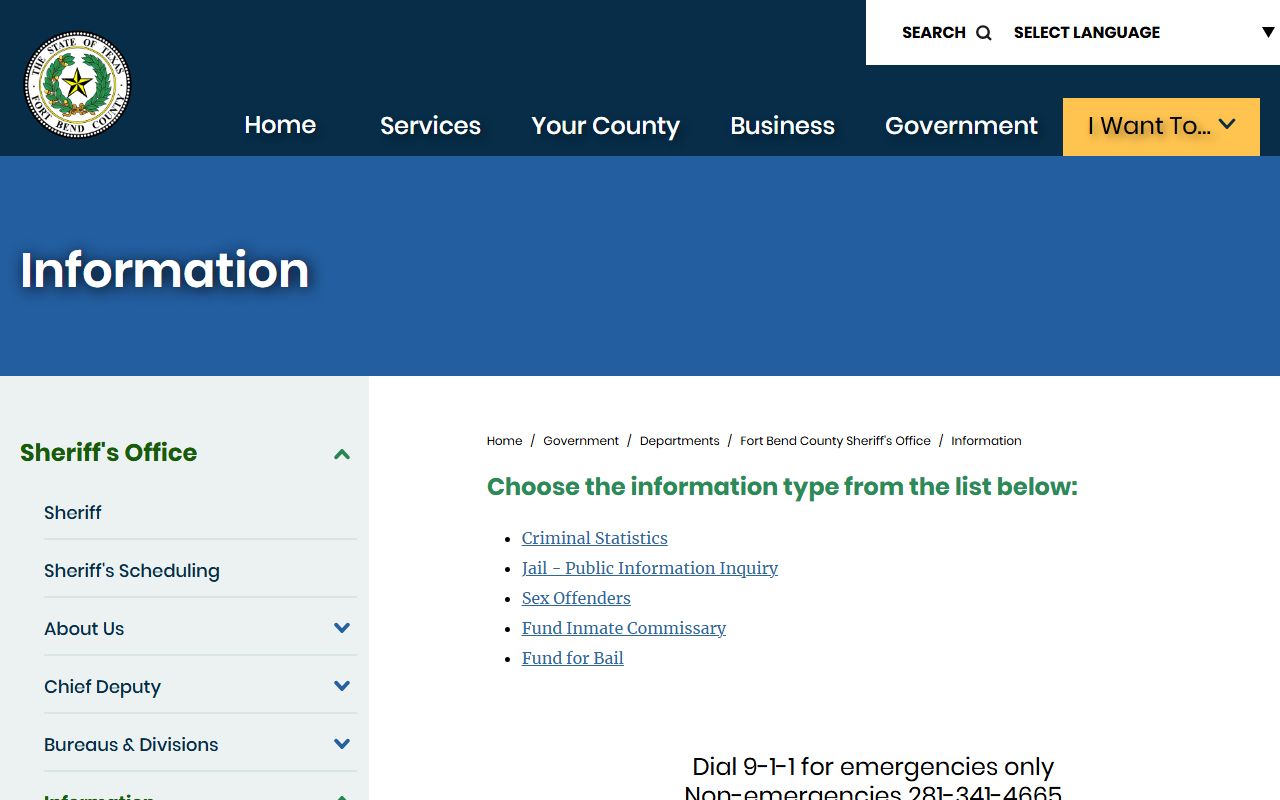
From there, the jail inquiry confirms whether a person is already in custody on a warrant. Sealed and search warrants are not public before they are served.
One local detail matters for anyone with a warrant. The Justice Center has a public security screening area run by the Sheriff's Court Security division, with more than 40 deputies and bailiffs. The official page states that court security can arrest a person who has an outstanding warrant or who is sentenced during a court appearance. So walking into the courthouse with an active warrant carries real risk, and it is better to resolve the warrant first.
Types of Warrants in Fort Bend County
Not every warrant works the same way. Some start a case, and some respond to a problem in a case already filed. The most common kinds in Fort Bend County are listed below.
- Arrest warrant: issued when probable cause supports taking a person into custody.
- Bench warrant or capias: issued by a court after a missed appearance, a probation violation, or a failure to comply.
- Search warrant: authorizes a search and is often sealed until it is executed.
- Capias pro fine: issued in fine-only cases after a person fails to pay a judgment.
Bond forfeiture can also trigger a warrant. A county court at law notes that a defendant with a capias may need to contact a bonding company or turn in at the jail for a new arraignment date.
A capias pro fine is worth a closer look, because it is common in traffic and fine-only cases. It issues after a person fails to pay a fine or court costs in a justice of the peace or municipal case. A county court at law confirms that a warrant will issue when a defendant owes court costs or fines and fails to appear. The fix is usually to contact that court about a payment plan, a hearing, or compliance, rather than to ignore it.
How to Search Fort Bend County Warrants
Because there is no standalone warrant portal, the search is indirect. Start with the Fort Bend County Jail Public Information Inquiry to see if the person is in custody. Then search Tyler Public Access court records for a related case number and any capias or warrant events. If you still need confirmation, contact the assigned court, the attorney, or the Sheriff.
- Search the jail inquiry by last name, first name, or both, using full or partial names.
- Open the inmate detail page and read the charge table for any authority or warrant entries.
- Search Tyler Public Access by party name for the related case, then check the docket for a capias.
Do not rely on third-party warrant websites. They are not official and are not used here. Dial 911 only for emergencies, not for a warrant check.
Fort Bend County Warrant Search Fields
The jail inquiry is the closest official search that surfaces warrant data. Its search form is simple. You enter one or both name fields, then run the search. The result list links to a detail page where any warrant rows appear.
| Field Label | Type | Required | Notes |
|---|---|---|---|
| Last Name | Text | No | Full or partial; use at least one name field. |
| First Name | Text | No | Full or partial last/first name. |
| Search | Button | n/a | Runs the query and lists matching inmates. |
| Clear | Button | n/a | Resets the name fields. |
The result list can return more than one person, so compare the Jail ID, race, sex, and age on the detail page to confirm the right match. The result table scrolls within a small window, so a common name may take a moment to sort through before you open the right profile.
What a Fort Bend County Warrant Record Shows
When warrant data appears on an inmate detail page, it sits in the charge table. The fields below come from a reviewed sample of that table. They show the warrant basis, the charge, and the bail, but not a separate issue date.
| Field | What It Shows |
|---|---|
| Warrant Number | The case or warrant identifier, which may carry a DCR or CCR reference. |
| Authority | The basis for the hold, such as a WARR warrant entry. |
| Charge Description | The criminal allegation or the basis for the warrant. |
| Level | The classification, such as F2, F3, or MA in Texas shorthand. |
| Bail Amount | The dollar amount set for that charge row. |
| Jurisdiction | The JUS field, showing DIST or CTY for district or county. |
Bail is listed per charge row, not as one case total. A row showing zero does not always mean a free release, because other holds or no-bond conditions may apply.
What to Do If You Have an Outstanding Warrant
An outstanding warrant does not go away on its own. The safest path is to confirm it, understand the charge and bond, and plan a response. A defendant with a capias may be told to contact a bonding company or to turn in at the jail, where a new arraignment date is set. Court security can arrest a person who shows up at the Justice Center with an active warrant, so do not assume a court visit is safe.
Important: Talk to a lawyer before you turn yourself in, so you understand the charge, the bond, and your options first.
Steps that tend to help are simple. Confirm the warrant through the jail inquiry or the court case. Learn the charge level and the bond amount. Line up a bonding company or counsel if a surrender is needed. If you cannot afford a lawyer, ask about the county's Public Defender and Indigent Defense at magistration. Acting early gives more options than waiting for an arrest at a traffic stop or at the courthouse.
Crime Stoppers and Anonymous Tips
The Fort Bend County Sheriff's Office takes anonymous tips. The tip line is 281-342-TIPS, which is 281-342-8477. The non-emergency line is 281-341-4665, and current investigation information runs through 281-341-4686. These lines help report a person with a warrant or share information on an open case.
You can also reach the Sheriff through the office's contact page for reports and questions. Police reports can be filed online, in person, or by phone.
The Sheriff's contact page lists the report options.
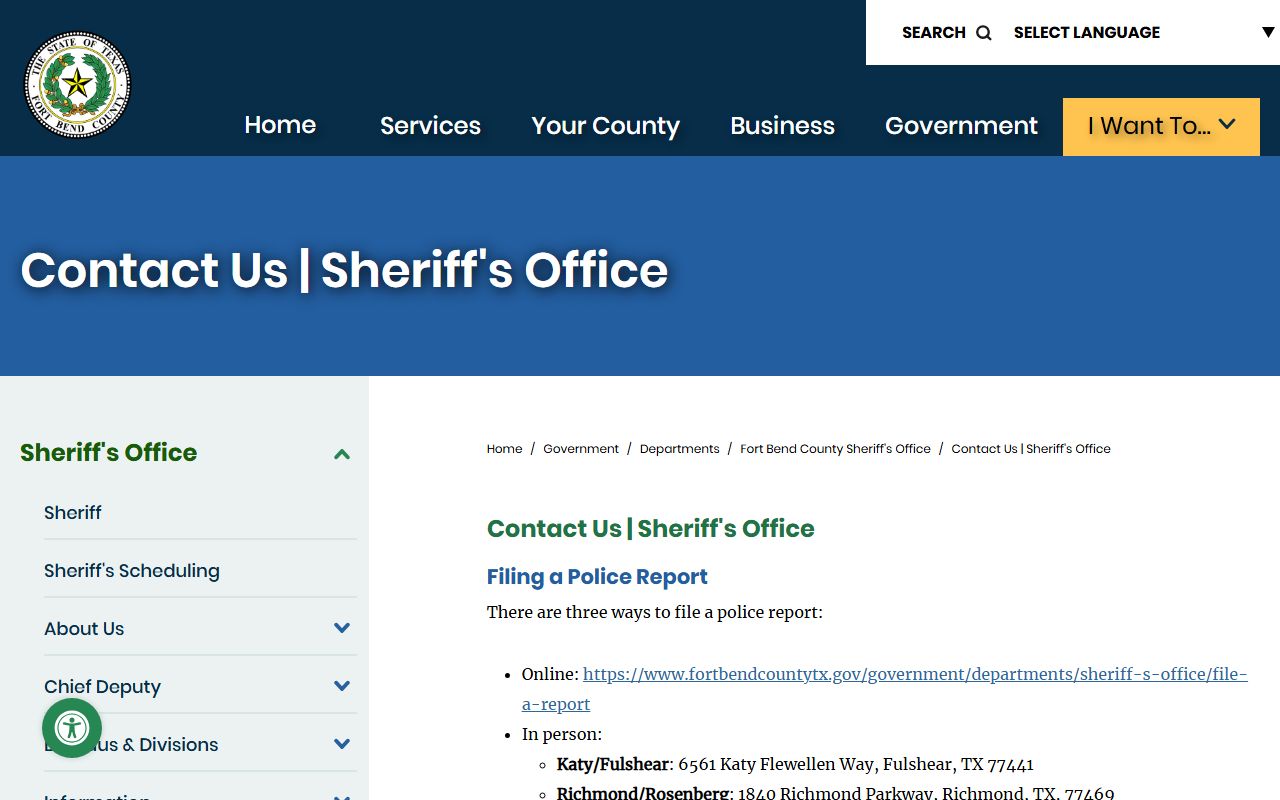
In-person report locations cover the Katy, Richmond, and Missouri City areas. Use these official channels rather than a third-party site. The Sheriff's page also reminds the public to dial 911 only for emergencies, so a warrant question belongs on the non-emergency or tip line instead.
Restricted Fort Bend County Warrant Records
Some warrants are not public. Search warrants are usually sealed until they are executed. Sealed indictments are not public before an arrest. Juvenile warrants are restricted under Texas juvenile law. Federal warrants are handled by federal agencies and do not appear in the county jail inquiry.
A separate public database worth noting is the state sex offender registry, which is not a warrant list. It is built from registration data, not active warrants.
The Texas DPS Sex Offender Registration Program explains how that public registry works.
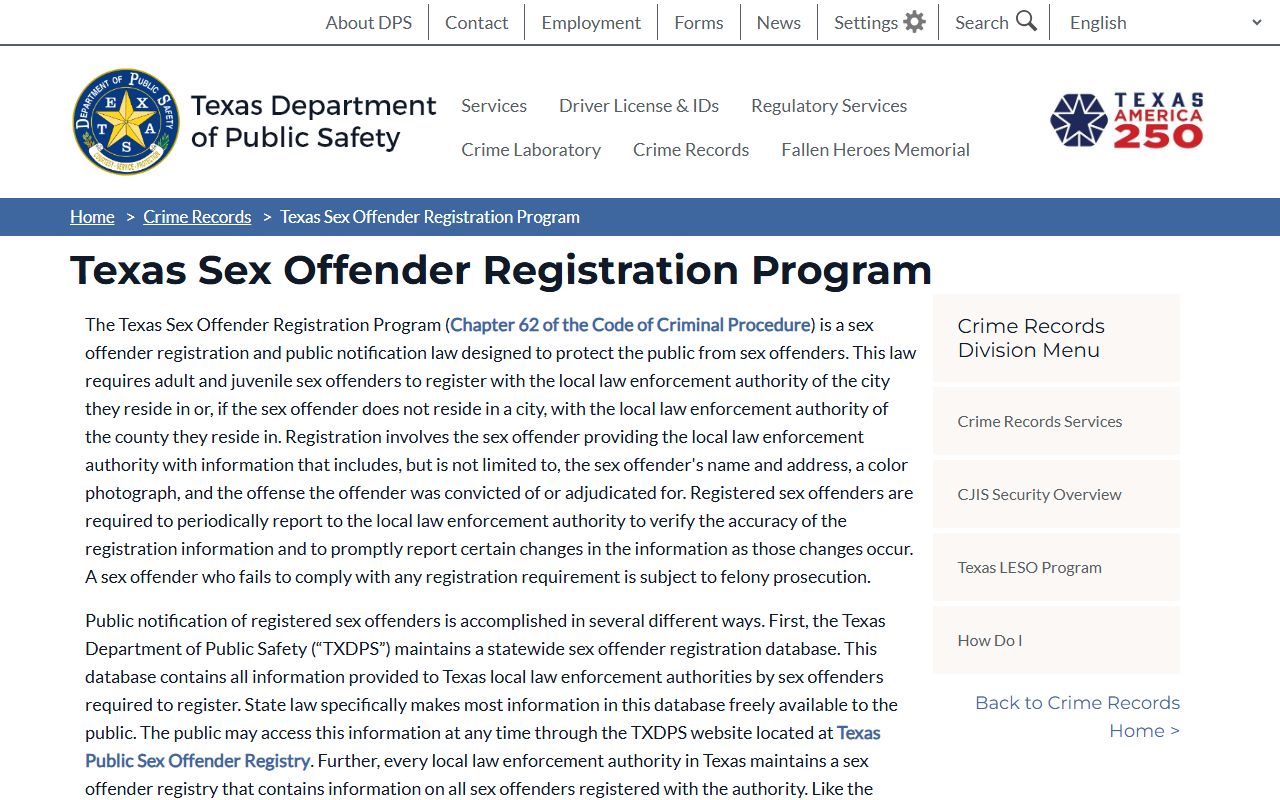
Use the registry only for its purpose. Absence from the jail inquiry does not prove that no warrant exists, so confirm with the court or the Sheriff when it matters.