
What Probate Covers in Fort Bend County
Probate is the court process for handling a person's affairs after death or incapacity. In Fort Bend County, it covers wills, estate administration, heirship, guardianship of adults and minors, trusts, and civil mental health matters. The goal is to confirm a valid will, appoint someone to manage the estate, pay debts, and pass property to the right heirs.
Fort Bend County does not have a standalone probate court. Instead, the county courts at law hear probate, and the County Clerk is the custodian of probate records. Bankruptcy is a separate federal matter and is not probate, even though both involve debts and assets.
The Southern District of Texas bankruptcy court handles federal debtor-creditor cases, not county estates.
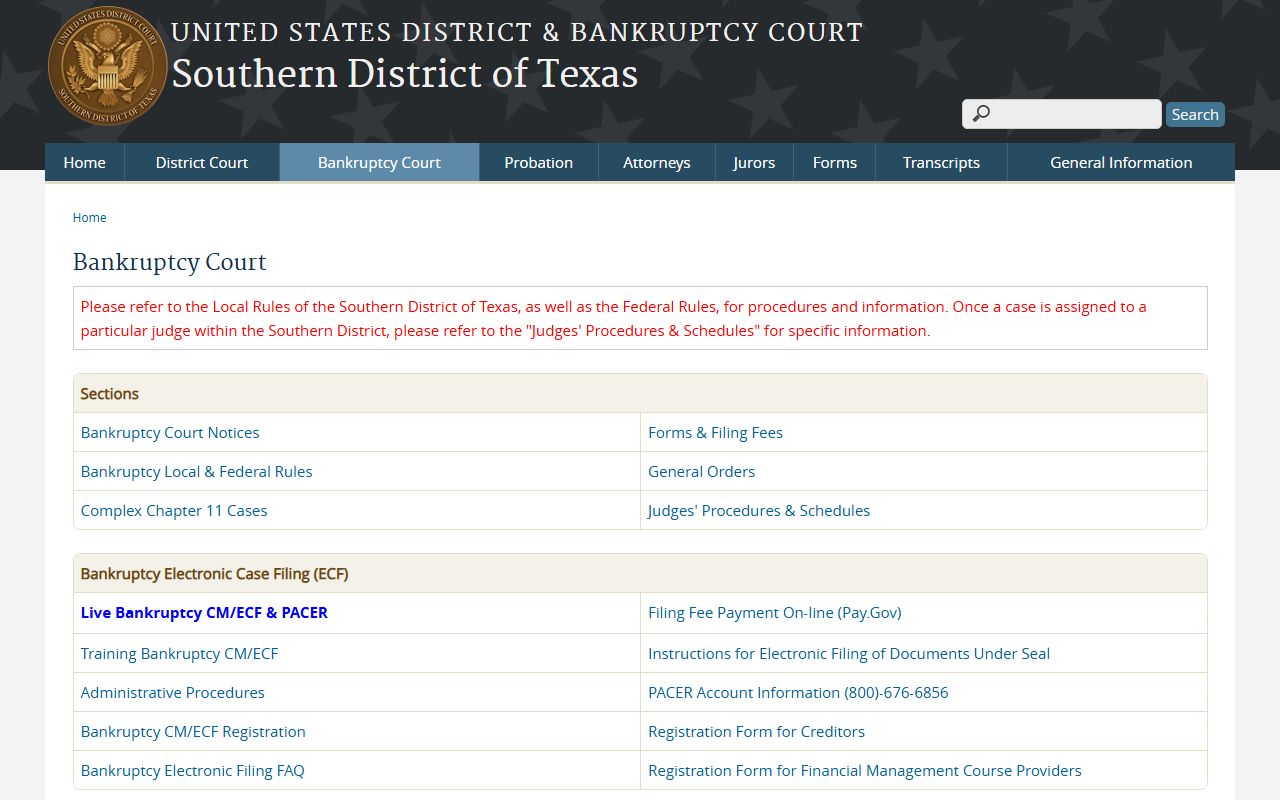
So an estate or guardianship goes to the county courts at law, while a bankruptcy goes to federal court.
Probate touches several life events. After a death, it confirms a will or, if there is none, sorts out heirs under state law. For a person who cannot manage their own affairs, a guardianship names someone to help. Trust matters and civil mental health cases also run through these courts. Each path has its own filings, but all of them produce a public case record that the County Clerk maintains.
Probate Terms Defined
Probate filings use specific words. A quick guide helps when reading a Fort Bend County probate record or an application.
- Testator
- The person who made the will.
- Executor
- The person named in a will to carry out its terms.
- Intestate
- Dying without a valid will, so state law decides the heirs.
- Guardianship
- A court arrangement to care for an adult or minor who cannot manage their own affairs.
- Conservatorship
- In Texas, a child-custody arrangement set in family court; adult incapacity is handled through guardianship.
How to Search Fort Bend County Probate Records
Probate cases are searched through the Tyler Public Access portal, reached from the County Clerk Online Record Search page. The County Clerk's probate search covers wills, guardianship, trust, and other probate matters from 1987 forward, plus historical probate volumes A through Z and 1 through 30. Some legacy files may be in transition during the county's records migration.
- Open the County Clerk Online Record Search and choose Probate Court.
- On the Tyler page, select Probate Case Records.
- Search by case number, party name, attorney, or the date the case was filed.
- Click the blue case number to open the Register of Actions with party, events, and financial information.
The party name can be the decedent, an applicant, a guardian, or a ward, depending on the case type. The Register of Actions then shows party information, events and orders of the court, and financial information for that case.
The County Clerk also lists Safekeeping of Wills, where a person can deposit a will for storage before death. Once a probate matter opens, the original will usually must be on file with the County Clerk before the assigned court sets a hearing. That filing step is easy to miss, and it can delay a hearing date if skipped.
Probate Courts in Fort Bend County
The six county courts at law hear probate, each on its own schedule. County Court at Law No. 1 handles probate and guardianship along with the Misdemeanor Mental Health Court. Other courts set probate on specific weekdays, some by Zoom and some in person, and each has a probate auditor who handles hearing settings. All sit at the Justice Center in Richmond.
County Court at Law No. 1
1422 Eugene Heimann Circle
Richmond, TX 77469
281-633-7415
Probate, guardianship, mental health
County Court at Law No. 3 Probate Auditor
Benny Charles
1422 Eugene Heimann Circle, Richmond, TX 77469
281-344-3912
benny.charles@fortbendcountytx.gov
Court staff can explain procedure and how the court works, but they cannot give legal advice or answer legal questions.
Each court runs probate on its own calendar, which is one of the most local details in the county. One court hears uncontested probate on Monday mornings, another on Monday afternoons, and others by Zoom on set weekdays. Contested matters are usually heard in person. Because the schedule differs by court, an applicant should check the assigned court's page and contact its probate auditor before requesting a hearing date.
Deadlines are strict. Some courts require proposed orders the week before a hearing and ancillary documents seven days ahead, such as ad litem reports, death certificates, and a criminal background search. In heirship cases, a written ad litem report may be due seven days before the hearing. Missing a deadline can cancel a setting, so calendar the court's cutoffs early.
Probate Filing Fees
Probate filing fees are set by the County Clerk and depend on the type of matter. The exact filing and letters fees are on the County Clerk fee schedule. Copy fees follow the standard clerk rate. Some hearings also require an ad litem deposit paid into the court registry before a hearing is set.
| Item | Amount |
|---|---|
| Original probate application | See County Clerk probate fee schedule |
| Letters testamentary | See County Clerk fee schedule |
| Certified copy per page | $1.00 plus $5.00 certification |
| Plain copy per page | $1.00 |
The County Clerk fees page lists the full copy and recording schedule.
The County Clerk fees page covers copy and certification costs.
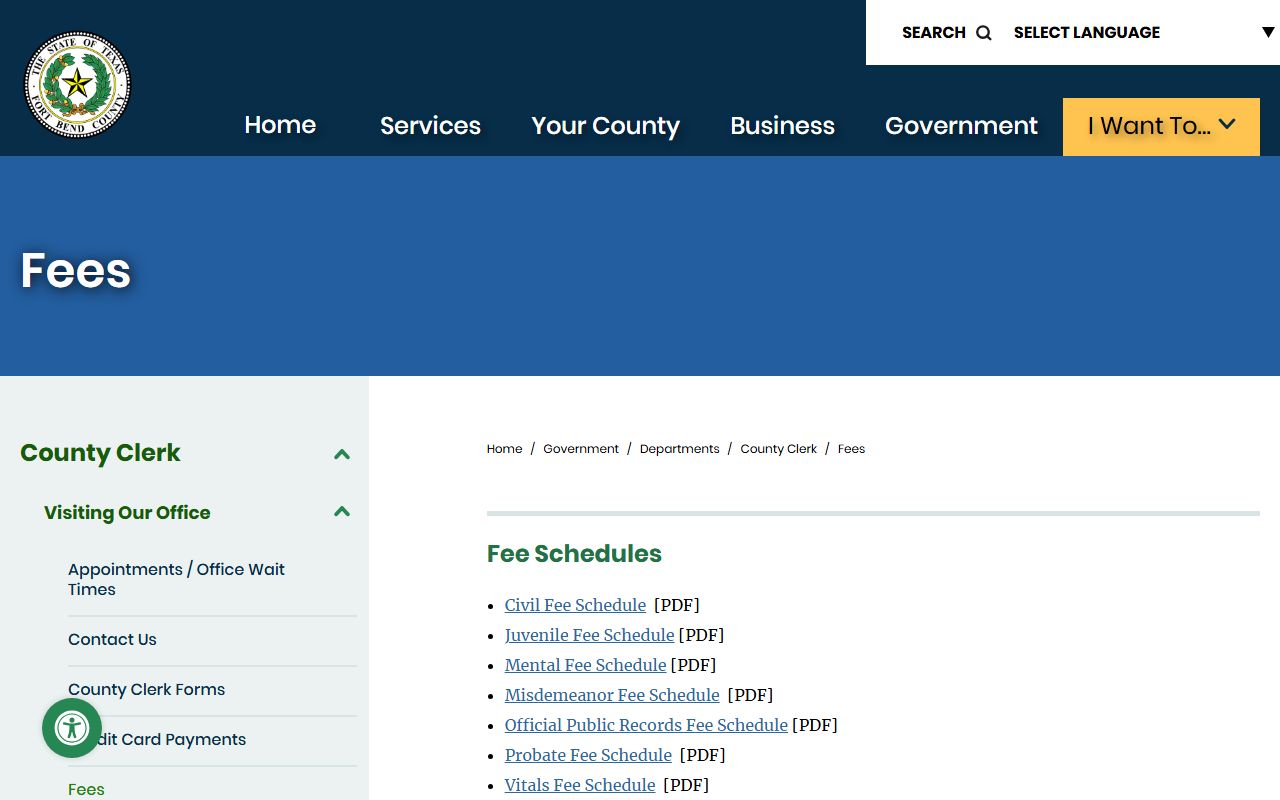
Confirm the current filing fee and any ad litem deposit with the assigned court before you file. One court requires the ad litem deposit to be paid into the court registry before a hearing is set, so budget for it early. Copy fees are separate from filing fees, and a certified copy of letters or an order adds the certification charge per document.
What Fort Bend County Probate Records Show
A probate file builds over the life of an estate. It can hold the application to probate a will, the will itself, letters testamentary or of administration, heirship findings, inventories, annual accountings, ad litem reports, and the court's orders. The Register of Actions lists each event with its date.
Each court sets deadlines. One court requires proposed orders the week before a hearing and ancillary documents seven days ahead, such as ad litem reports, death certificates, and a criminal background search. An original will usually must be filed with the County Clerk before a hearing date is requested.
The probate search itself reaches back decades. The County Clerk's probate records run from 1987 forward, and the Historical Probate set holds entire Probate Volumes A through Z and 1 through 30 plus index volumes. So a search can cover both a recent estate and a very old one, though older legacy documents may be in transition during the county's records migration.
Restricted Probate Records
Guardianship and sensitive probate filings can include confidential medical, financial, or minor information that is not open to the public. Civil mental health records are protected. A court may seal parts of a file. One county court notes that a peace officer who arrests or detains a person under guardianship has a statutory duty to notify the court.
For records that are not public, access is usually limited to the parties, their attorneys, or by court order. The clerk cannot release a sealed or protected record without that authority.
Guardianship carries extra duties built into the law. One county court notes the statutory duty of a peace officer to notify the court if they arrest or detain a person who is under a guardianship. That kind of provision shows how closely the court tracks a protected person. For families, it is a reminder that a guardianship is an ongoing court relationship, not a one-time filing, with reports and accountings due over time.