
Arrest Records in Fort Bend County
Arrest records in Fort Bend County come from law enforcement, mainly the Sheriff's Office and city police departments. When deputies book a person into the county jail, the booking creates a record of the arrest. That record lists the person, the holding agency, the charges, and any warrant behind the arrest. The Sheriff's Office runs the jail and the public jail inquiry, so a recent arrest usually shows there first.
An arrest record is different from a criminal court record and from a conviction. The arrest record is the law enforcement file. The court record begins when the District Attorney files charges and the clerk opens a case. The District Attorney decides what to charge and how to prosecute.
The Fort Bend County District Attorney, Brian Middleton, leads that office.

For the full court file behind an arrest, the Fort Bend County court records page covers the case search. This page leads with arrest records.
How to Search Fort Bend County Arrest Records
The main tool is the Fort Bend County Jail Public Information Inquiry at jailinq.fortbendcountytx.gov. It searches people currently in custody by name. For someone just arrested, this is the fastest check. For the criminal case itself, use the Tyler Public Access court search. For a statewide criminal history, the Texas Department of Public Safety runs a separate service.
- Open the jail inquiry and enter a last name, first name, or both; full or partial names work.
- Click the person's name to open the detail page with charges, bail, and jurisdiction.
- For the court case, search Tyler Public Access by party name in the Criminal Case Records category.
- For a formal background check, request a Texas DPS criminal history rather than relying on a jail row.
Indigent defendants in Fort Bend County are served by the Public Defender and the county's Indigent Defense plan. The Fort Bend County Public Defender handles felony and misdemeanor trial cases.
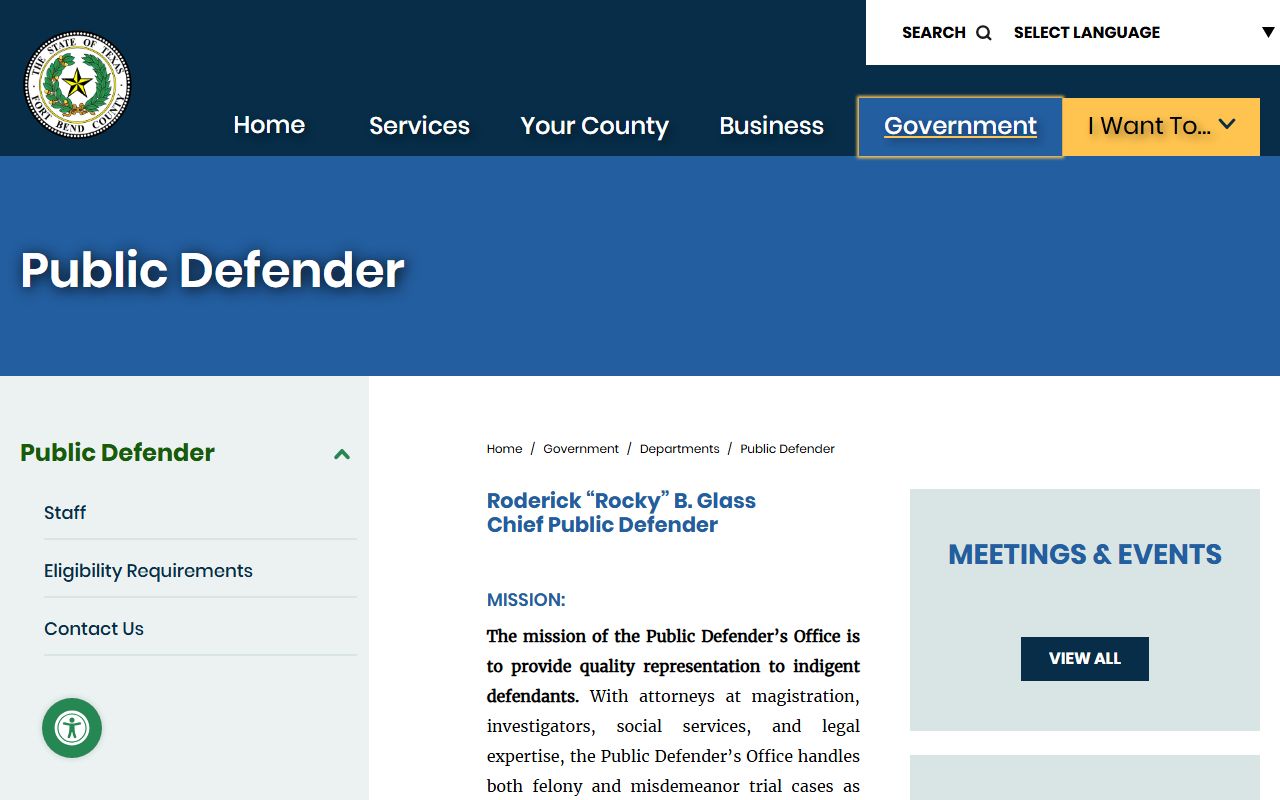
The Public Defender works at magistration to cut needless pretrial jail time. A person with questions about an arrest case can also use the jail inquiry to confirm custody and bail.
Court-appointed counsel runs through the county's Indigent Defense plan. After magistration, the magistrate sends appointment requests for eligible felony and misdemeanor arrestees, and counsel is appointed by the end of the first working day. The Indigent Defense line is 281-341-3780, and the Public Defender line is 281-238-3050. A defendant who cannot afford a lawyer should ask about appointment early, because a fast appointment can shorten time in custody.
Arrest Records vs. Criminal Court Records
An arrest happens at booking. A court record begins later, when charges are filed and a case opens. The two files live in different places and hold different things. The Sheriff keeps the arrest and custody record. The clerk keeps the court case file.
| Arrest Record | Criminal Court Record | |
|---|---|---|
| Source | Sheriff / Police | District or County Clerk |
| Created When | Booking | Charges filed |
| Contents | Booking info, charges, bail, warrant | Pleadings, motions, disposition |
A jail charge row is an allegation or a hold. It is not a conviction. To know how a case ended, read the court Register of Actions or the judgment, not the booking sheet.
Charges vs. Convictions
Being charged is not the same as being convicted. A charge is an accusation. A conviction is a court finding of guilt by plea or verdict. Both can appear in public records, but they mean very different things for the person named.
| Charge | Conviction | |
|---|---|---|
| Stage | Accusation | Verdict or plea |
| Burden of Proof | Probable cause | Beyond a reasonable doubt |
| Public Record | Yes | Yes |
Texas also uses deferred adjudication. A person can complete supervision without a final conviction, which later affects eligibility for sealing or nondisclosure.
Sealed vs. Expunged Records
Texas offers two main ways to limit a criminal record. Expunction destroys or removes eligible records. An order of nondisclosure, often called sealing, hides the record from the public but lets criminal justice agencies still see it. Expunction is the stronger remedy.
| Sealed | Expunged | |
|---|---|---|
| Visibility | Hidden from public | Destroyed or treated as never existed |
| Law Enforcement | Limited access | Very limited |
| Eligibility | Some deferred adjudication outcomes under Government Code Chapter 411 | Acquittals, dismissals, and certain arrests with no charge under Code of Criminal Procedure Chapter 55 |
The petition is filed in the court with jurisdiction. In Fort Bend County, the District Attorney's Civil Division handles responses to expunction and nondisclosure petitions. Common denial reasons include a pending charge, an ineligible conviction, or a waiting period that has not passed.
Mugshots and Booking Photos
A booking photo may appear on the inmate detail page in the jail inquiry. It is not guaranteed. The sample profile reviewed showed an "Image Unavailable" placeholder instead of a photo. So do not assume a mugshot will always be there.
Mugshots are public records in Texas in many cases, but the county portal controls what it displays. Third-party mugshot websites are not official and are not used here. For a verified photo or arrest report, contact the Sheriff's Records Division.
The jail search itself returns a short result list before you open a profile. The columns include the person's name, a public Jail ID such as a P-number, race, and sex, with a hidden booking number behind the scenes. A partial name can return several people, so the detail page is where you confirm the match. The profile header shows name, Jail ID, age, race, and sex, then a charge table with the agency, charge, bail, and disposition for each row.
Statewide Criminal Records Search
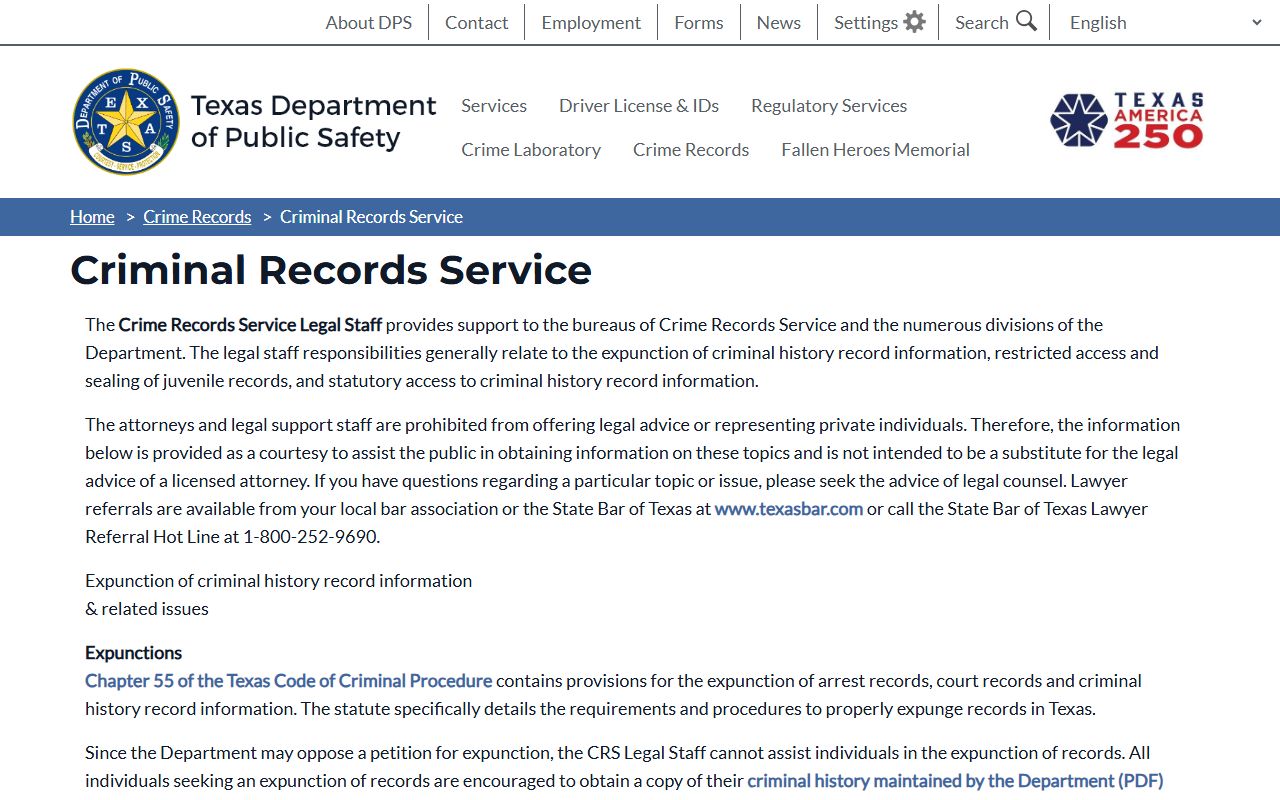
A county jail search only shows local custody. For a full criminal history across Texas, use the Department of Public Safety. DPS keeps name-based and fingerprint-based criminal history records and explains expunction and nondisclosure references.
The Texas DPS Criminal Records Service is the official statewide source.
Federal charges are handled separately. Crimes prosecuted by the United States are not filed in Fort Bend County courts. The U.S. Attorney for the Southern District of Texas lists Fort Bend County in its Houston region.
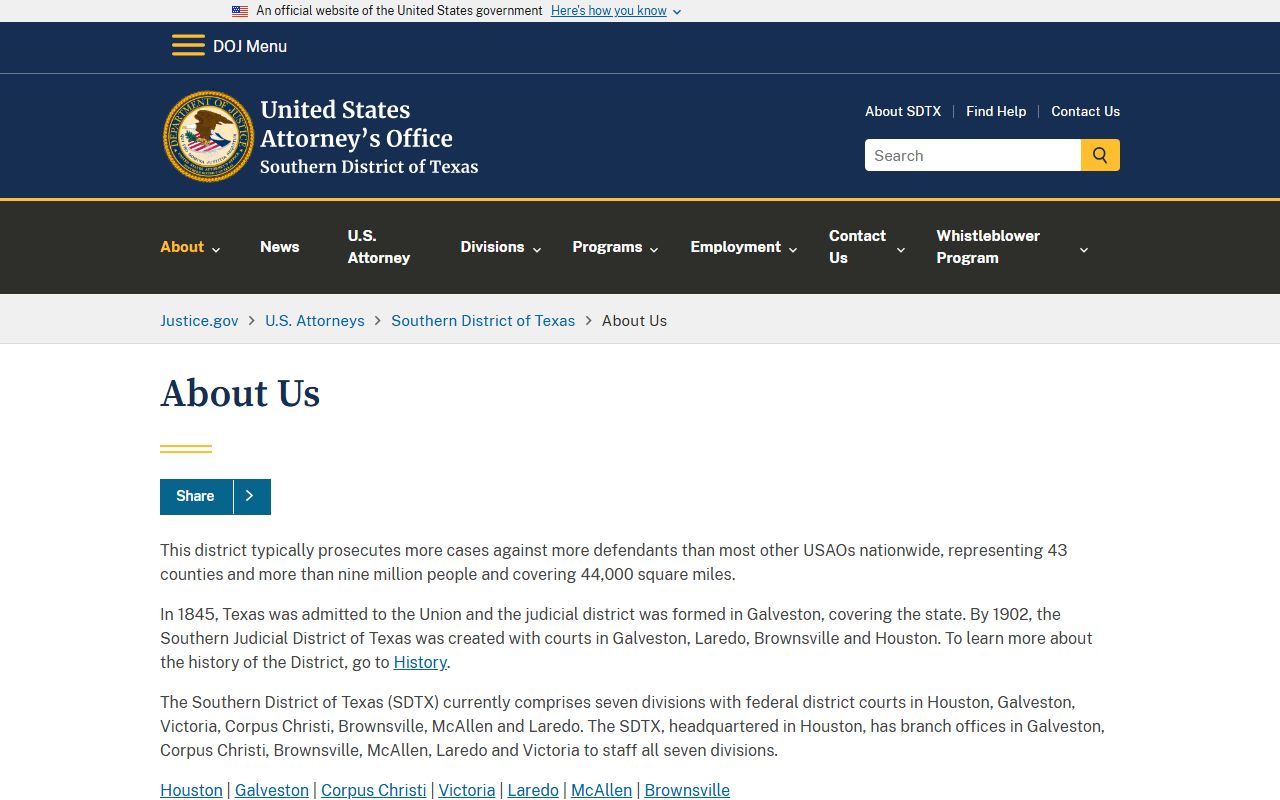
Federal case records are searched through PACER, not the county portal. A federal case arising in the county may sit in the Southern District of Texas instead of a Fort Bend County court.
Background Check Considerations
There is a difference between a casual name search and a regulated background check. Employers, landlords, and lenders must follow the federal Fair Credit Reporting Act when they use a consumer report. A quick jail or court lookup is not an FCRA-compliant report. For hiring or housing decisions, use a licensed screening provider and a DPS criminal history.
Important: This site is not a consumer reporting agency under the FCRA, and its information cannot be used for credit, employment, tenant, or insurance decisions.
Restricted Criminal Records in Fort Bend County
Some criminal records are closed. Juvenile records are restricted and are not part of the adult jail inquiry. Sealed files show little or nothing in the public portal. Records from an active investigation can be withheld under the law-enforcement exception in the Texas Public Information Act. Victim identifiers in sexual assault, family violence, and trafficking cases may be redacted.
Expunged records are removed from public systems, and using or releasing them after a final expunction is barred except as the statute allows. If a record should have been sealed or expunged but still appears, contact the clerk or the court that handled the case.
It helps to know which office holds which criminal record. The Sheriff keeps arrest and custody records. The District Attorney holds the prosecution file, which is subject to law-enforcement and discovery rules. The clerk keeps the court case file with filings and the judgment. Texas DPS holds the statewide criminal history. A person sentenced to prison shows up in the state or federal corrections system, not the county jail.
Arrest affidavits and police reports come from the Sheriff's Records Division at fbcsorecords@fortbendcountytx.gov. A request for a certified judgment, by contrast, goes to the District Clerk or County Clerk that holds the case.