
How to Find Recently Released Fort Bend County Inmates
The Fort Bend County jail inquiry shows people in custody, not a separate released list. The reviewed inmate profile did not include a clean release-date field; it showed a Disposition column with one date on a charge row. So the roster is a starting point, not a final answer. If a person no longer appears, they may have been released, transferred, or moved to another system.
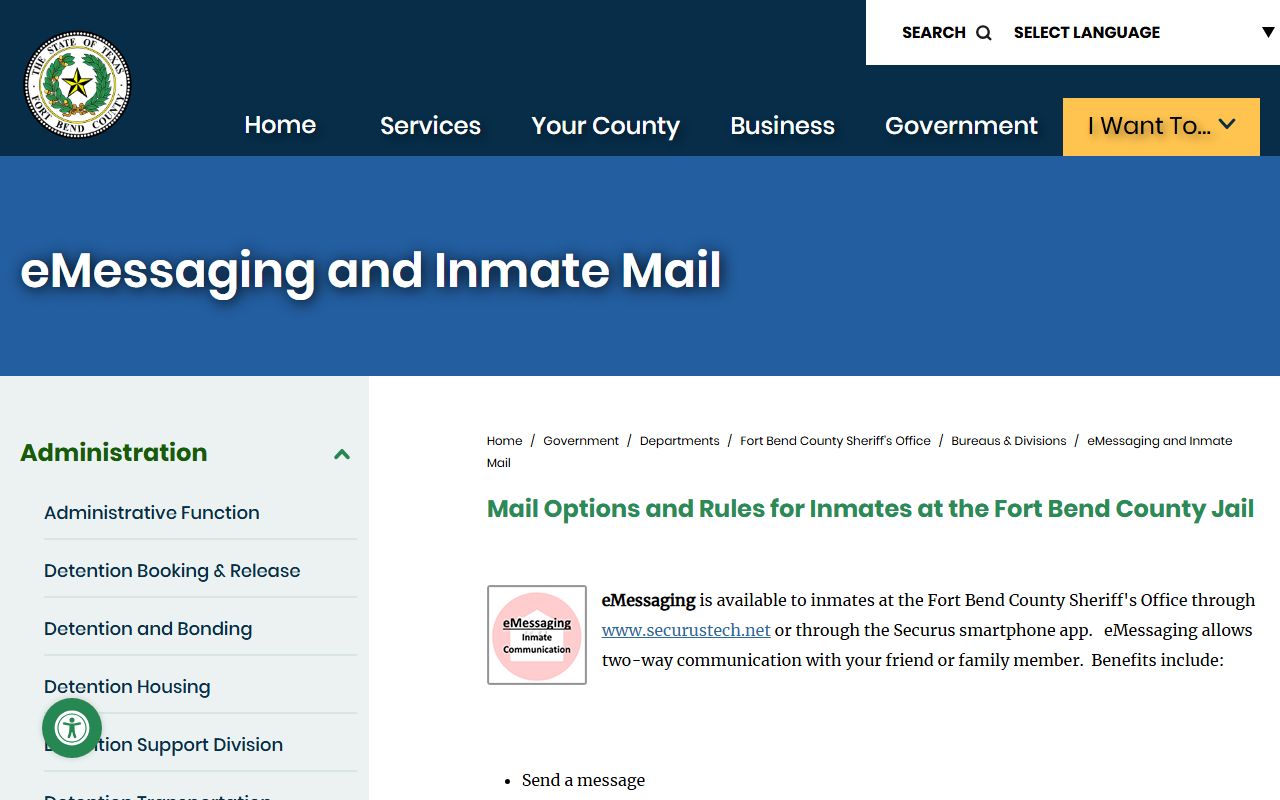
One official detail does trigger after release. The jail's mail page says a released inmate has up to 60 days to download mail received while in custody, and only released inmates can access that system. If the person has not been released, the system returns an error, which can itself hint at custody status.
The jail mail and release page explains the download rule.
For urgent confirmation, call the Sheriff's non-emergency line or check court records for a bond, dismissal, or judgment entry.
A missing name has more than one cause. A person may leave the county jail for state prison after sentencing, for federal custody, for another county on a warrant, for a hospital, or for an immigration hold. Each path lands them in a different system. So the smart move is to match the likely path to the right search, rather than assume one empty result means the person is home.
These terms help sort out what a release record means.
- Release
- The person has left custody, by bond, dismissal, time served, or order.
- Transfer
- The person moved to another jail, prison, or agency and is still in custody.
- Hold
- A detainer from another jurisdiction that can block release even with bond posted.
- Discharge
- The full completion of a sentence, including any supervision.
Setting Up Release Notifications
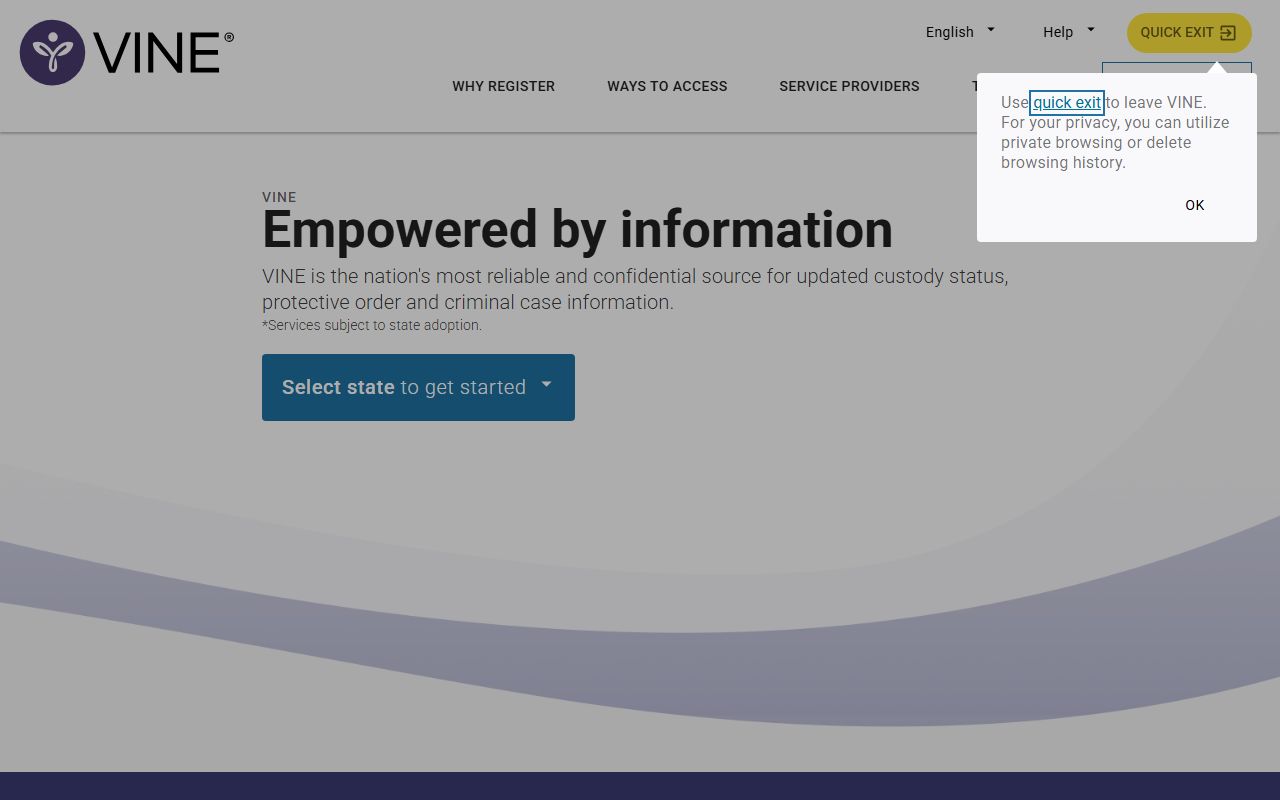
VINELink is a free service that sends alerts when a person's custody status changes, where the agency shares data. It is a notification tool, not a court docket, so it does not replace the jail or court for urgent legal decisions. Register to get a call, text, or email when status changes.
- Open VINELink at vinelink.com and choose Texas.
- Search by name or offender ID where available.
- Register for alerts by phone or email on the matching record.
The VINELink portal handles custody-status notifications.
Alerts depend on current agency data, so verify a release with the county jail or court before acting on it.
VINELink works best for ongoing situations. A protective-order holder or a victim can register once and get a call, text, or email when status changes, instead of checking a roster every day. Coverage depends on which agency holds the person and whether its data feeds the system, so it is a helpful alert, not a guarantee.
Searching the Texas Department of Criminal Justice
A Fort Bend County defendant sentenced to state prison moves to the Texas Department of Criminal Justice, or TDCJ. The TDCJ inmate information page says location, offenses, and a projected release date can be found online, by email, or by phone. There can be an intake delay before a person appears after sentencing.
| Field Label | Type | Required | Notes |
|---|---|---|---|
| Last Name | Text | No | Name search; combine with first name to narrow. |
| TDCJ / SID Number | Text | No | Search by the TDCJ or state ID number if known. |
The TDCJ inmate information page links the online offender search. TDCJ covers state prison custody, not local pretrial jail.
There is often a gap between a county sentence and a TDCJ record. After sentencing, a person waits for transfer and intake before appearing in the state system. During that window they may be gone from the county roster but not yet listed by TDCJ. Checking both, a few days apart, gives a clearer answer.
Federal Bureau of Prisons Locator
A person in federal custody will not appear in the county jail or in TDCJ. The Federal Bureau of Prisons locator covers federal inmates from 1982 to the present. A federal case arising in the Fort Bend and Houston area may show in the BOP, not the county system.
| Field Label | Type | Required | Notes |
|---|---|---|---|
| Last Name | Text | No | Search by name, with first name to narrow. |
| BOP Register # | Text | No | Also accepts DCDC, FBI, or INS numbers. |
The BOP inmate locator is the official federal search.
Federal and county tracks rarely overlap. Local charges do not appear in the BOP, and a federal case is not searched in the county Tyler portal. A person prosecuted by the United States for conduct in the Fort Bend area may show in PACER and the BOP, while a county case stays in the county system.
Verifying Release in Person or By Phone
When an online search is not enough, go to the source. Call the Sheriff's non-emergency line at 281-341-4665 for custody questions. Check Tyler court records for a bond, capias, judgment, or disposition that explains a release. An attorney on the case can also confirm status. A person may leave county jail for state prison, federal custody, another county, a hospital, or an immigration hold, so a single empty search does not prove freedom.
Property return and other release logistics were not detailed on the county pages reviewed, so ask the jail directly for those specifics.
Timing matters when a release is urgent. If a bond is posted late in the day, processing and release can take hours. If a hold from another agency exists, a posted bond may not free the person at all. When the answer drives a real decision, such as a ride home or a court deadline, confirm directly with the jail rather than relying on a single online check.
Texas Sex Offender Registry
The Texas Department of Public Safety runs a public sex offender registry built from Chapter 62 registration data. It is a separate database from the jail roster and is not a release list. It lets the public search registrants by name or area.
| Field Label | Type | Required | Notes |
|---|---|---|---|
| Last Name | Text | No | Search registrants by name. |
| ZIP / Radius | Text | No | Search by area to see nearby registrants. |
The Texas DPS Sex Offender Registration Program explains how the registry works.
Parole and Probation Information
Release from prison often comes with supervision. Parole release and conditions for people leaving Texas prisons are decided by the state parole system and supervised by the TDCJ Parole Division. Probation, also called community supervision, is set by the sentencing court. A violation of either can return a person to custody, which may then show again in a jail or prison search.
Texas Board of Pardons and Paroles
Parole release and conditions for people leaving Texas prisons.
Supervision is managed through the TDCJ Parole Division.
Reentry Resources in Fort Bend County
Reentry after release touches housing, jobs, benefits, and legal cleanup. Several official and high-authority resources serve Fort Bend County residents. They are listed by the county or by statewide agencies, not by third-party sites.
- TDCJ Reentry and Integration Division: linked from the TDCJ inmate information page.
- Texas Workforce Commission and local Workforce Solutions: jobs and training.
- Texas Health and Human Services: SNAP and Medicaid eligibility.
- Texas Law Help and Lone Star Legal Aid: civil legal help, including expunction and nondisclosure.
- Texas Legal Services Center and the State Bar of Texas referral service: statewide legal aid and attorney referrals.
The Fort Bend County Public Defender handles criminal defense at magistration and trial, not general post-release civil services.
Sorting needs early helps. Housing, a job, and benefits each run through a different agency, and legal cleanup like expunction or nondisclosure runs through the courts. Starting those requests soon after release, with help from legal aid or the county law library, avoids gaps that can set a person back. The District Clerk's resource links also point to Texas Law Help and the Texas State Law Library for self-help.
Civil Rights Restoration After Release
Rights return on different timelines. In Texas, felony voting rights are generally restored after a person fully discharges the sentence, including incarceration, parole, and supervision. Confirm current guidance with Fort Bend County Elections or the Texas Secretary of State before relying on it.
Firearm rights are a separate matter controlled by Texas and federal law, and release does not automatically restore them. Driver license issues, state holds, and surcharges can also outlast jail release, so use DPS licensing channels to clear those. For sealing or expunction of the underlying record, see criminal records.
Documentation closes the loop. For voting, confirm discharge status before registering. For driving, order a DPS driver record to see any holds or surcharges that survived the case. For firearms, get legal advice, since state and federal limits can continue after a sentence ends. Treat each right as its own question with its own proof.