
How to Look Up Fort Bend County Jail Population Data
The most reliable source for county jail population is the Texas Commission on Jail Standards, which collects monthly population reports from every Texas county jail. Those reports show counts by category and are filed by the Sheriff's Office. The Fort Bend County Sheriff also publishes annual reports for recent years, and the county budget books cover detention staffing and operations.
Read these sources for what they actually measure. A monthly report is a snapshot, not a live counter. An annual report sums a year. The county's own department pages describe the jail and the Sheriff's Office but did not publish a live population dashboard in the pages reviewed. So the official numbers live in state reports and county budget and annual documents, not on a single web counter.
A few terms make jail population figures easier to read.
- Average daily population
- The number of people held per day over a period, not the annual total.
- Bookings
- Admissions to the jail; one person can be booked several times in a year.
- Pretrial
- People held before a conviction or sentence.
- Sentenced
- People serving a county jail sentence after conviction.
- Holds
- Detainers from another jurisdiction that can prevent release even with bond.
Fort Bend County Jail Capacity Overview
The Sheriff's Office runs the county jail on Richmond Parkway in Richmond. The jail is a U.S. Department of Justice certified detention center and was the first in Texas to earn PREA certification. A specific rated bed capacity was not published on the county pages reviewed, so the table points to the state source for current counts.
| Facility | Rated Capacity | Current Population |
|---|---|---|
| Fort Bend County Jail / Detention Center | Not published on county pages reviewed | See Texas Commission on Jail Standards monthly report |
| Sheriff's Office (administrative) | Not a housing facility | N/A |
The About FBCSO page gives useful scale: the office reports more than 800 employees, 565 sworn peace officers, and 25 reserve deputies serving nearly 900,000 residents across 885 square miles.
The About the Fort Bend County Sheriff's Office page gives this background.
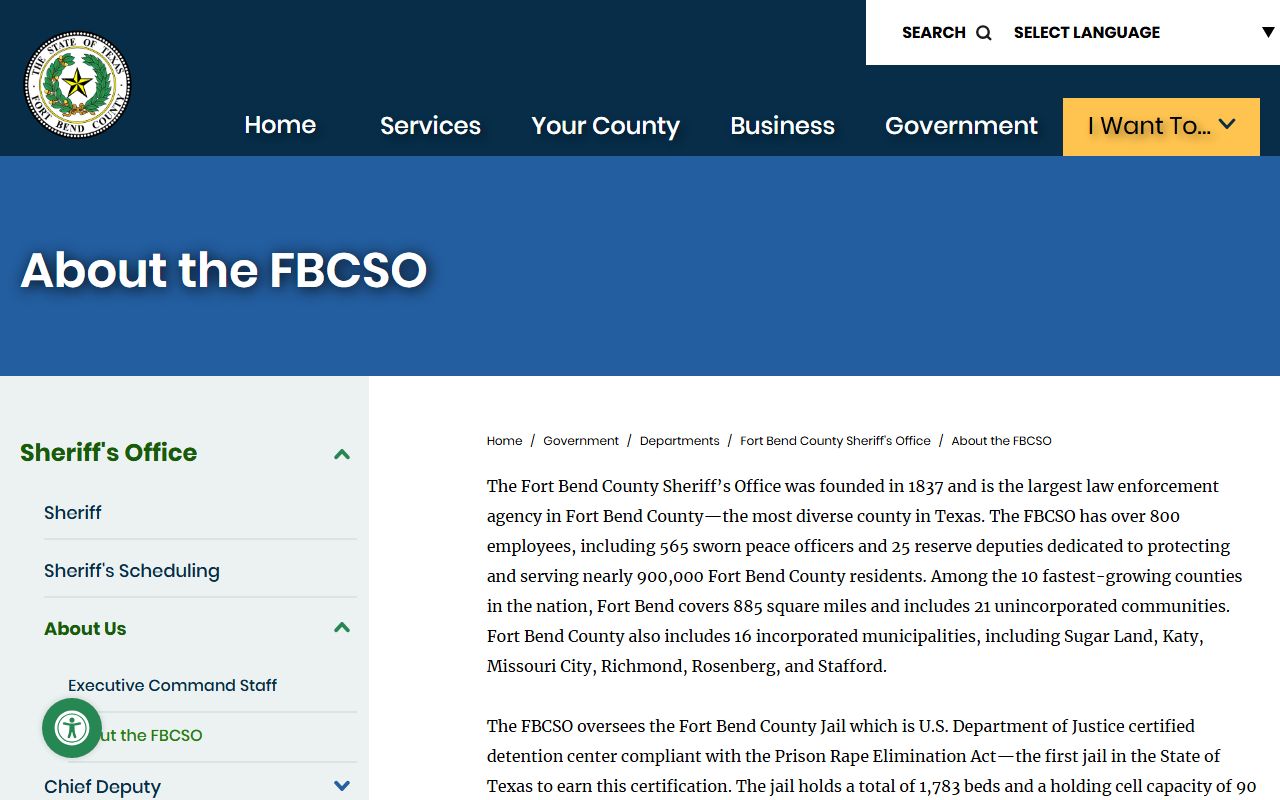
The same page notes the county is among the fastest growing in the nation, which shapes long-term demand on the jail.
Average Daily Population
Average daily population, or ADP, is the number of people held per day over a period. It is not the same as total bookings, since one person can be booked several times in a year. The county pages reviewed did not publish an ADP figure. The Texas Commission on Jail Standards monthly report is the official place to read it for Fort Bend County.
When you find an ADP number, check the period it covers and the date it was filed. A single month can swing with arrests, docket speed, and bond decisions.
ADP and bookings tell different stories. A county can book many people in a year while keeping a lower daily population, because most are released quickly on bond or after a short stay. A smaller number of longer-held defendants can drive the daily count up even when bookings hold steady. Reading both together, from the same official report, avoids drawing the wrong conclusion from one figure alone.
Demographic Breakdown
The public jail inquiry records basic demographics for each inmate, but the county pages reviewed did not publish a population-wide demographic breakdown. The table shows which fields the jail tracks and how they appear, rather than invented percentages.
| Demographic Field | How It Appears |
|---|---|
| Sex | Recorded per inmate; not published as a county total. |
| Race | Recorded per inmate; not published as a county total. |
| Age | Shown on the profile; not published as a county total. |
For a population-level breakdown, the state jail-standards data and federal Bureau of Justice Statistics reports are the proper sources, clearly marked as state or national rather than county-specific.
Pretrial vs. Sentenced Population
A jail holds two broad groups. Pretrial detainees are held before conviction or sentencing. Sentenced county inmates serve a county jail sentence. The split matters because pretrial numbers respond to bond, magistration speed, and the work of the Public Defender at first appearance. The county pages reviewed did not publish this split.
| Status | Availability |
|---|---|
| Pretrial | Not published on county pages reviewed; check Texas Commission on Jail Standards. |
| Sentenced | Not published on county pages reviewed; check Texas Commission on Jail Standards. |
Holds add a wrinkle. A detainer or warrant from another jurisdiction can keep a person in jail even if local bond is posted.
Pretrial numbers are sensitive to local choices. Faster magistration, reasonable bond, early appointment of the Public Defender, and quick docket settings all tend to lower pretrial detention. Slower steps push it up. That is why the same county can see its jail count move without any change in the crime rate, simply from how fast cases move through the courts.
Misdemeanor vs. Felony Population
Charge level shapes who stays in jail and for how long. Felonies route to the district courts, while Class A and B misdemeanors route to the county courts at law. Felony defendants tend to face higher bonds and longer pretrial stays. The county pages reviewed did not publish a misdemeanor-versus-felony population count, so the Texas Commission on Jail Standards report is again the source to check.
Specialty courts can pull some people out of standard custody. The county runs a Misdemeanor Mental Health Court, a DWI Court, and a Veteran's Court that aim to treat causes rather than simply detain.
Mental Health and Medical Population
Some inmates need mental health or medical care, and the jail provides it. County Court at Law No. 1 oversees the county's only Misdemeanor Mental Health Court, built to cut repeat offenses among defendants with mental illness. The Public Defender also screens for mentally ill defendants at magistration. The county pages reviewed did not publish the share of the population receiving care, and medical details are private under the law.
National and State Context
County numbers mean more next to state and national figures. The federal Bureau of Justice Statistics publishes annual jail data for national and state context, and the Vera Institute tracks county incarceration trends as secondary research. The Texas Commission on Jail Standards holds the official Texas county figures. The table shows where each rate lives, since the reviewed county sources did not list a per-100,000 figure.
| Level | Where to Find the Rate |
|---|---|
| Fort Bend County | Texas Commission on Jail Standards monthly reports |
| Texas | State jail-standards totals and BJS state data |
| National | BJS Jail Inmates annual report |
State prison custody is tracked separately by the Texas Department of Criminal Justice, which covers people sentenced beyond county jail.
The TDCJ inmate information page covers the state prison side.
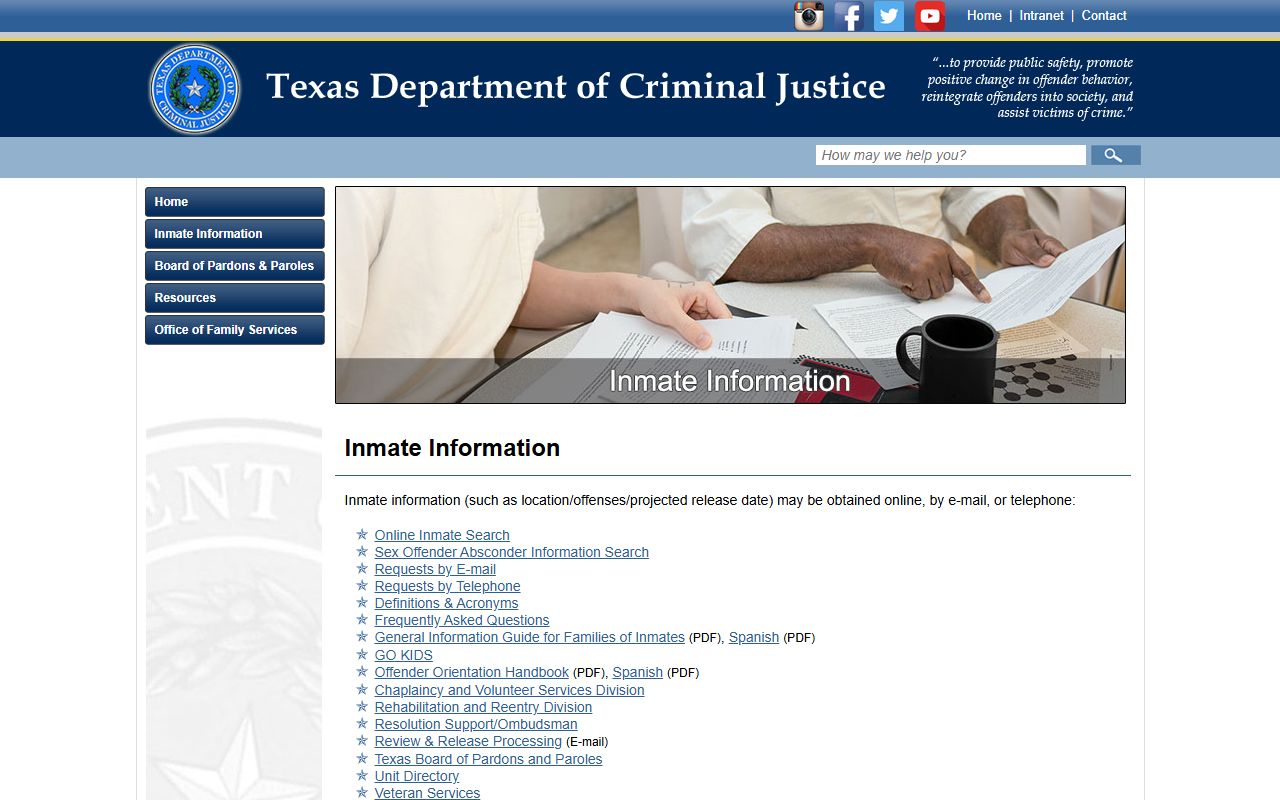
A Fort Bend County defendant sentenced to prison leaves the county jail count and joins the TDCJ count.
Population Trends Over Time
Fort Bend County has grown fast, and court and jail demand grow with it. The county describes itself as among the ten fastest-growing counties in the nation and the most diverse in Texas, with 16 incorporated municipalities and major highways feeding arrests and court access. Over time the county moved from the historic 1909 courthouse to the 1989 Travis building to the 2011 Justice Center, a sign of rising caseloads.
To track a multi-year trend, line up the Sheriff's annual reports for recent years with the Texas Commission on Jail Standards monthly filings. Those official series, not aggregator estimates, give the real shape of the trend. Reading several years side by side also separates a short spike from a lasting change in the county's jail population.
Searching for Fort Bend County Inmate Records by Name
This page covers aggregate jail population data, not individual lookups. To find a specific person in the county jail by name, use the Fort Bend County inmate records page and the Sheriff's jail inquiry, which searches the live roster.
Where the Data Comes From
The numbers behind this topic come from a few official places. The Texas Commission on Jail Standards collects monthly county jail population reports. The Sheriff's Office publishes annual reports and operates the jail. County budget books detail detention staffing and operations. For people who have moved into federal custody, the Bureau of Prisons keeps its own count.
The Federal Bureau of Prisons locator tracks federal inmates.
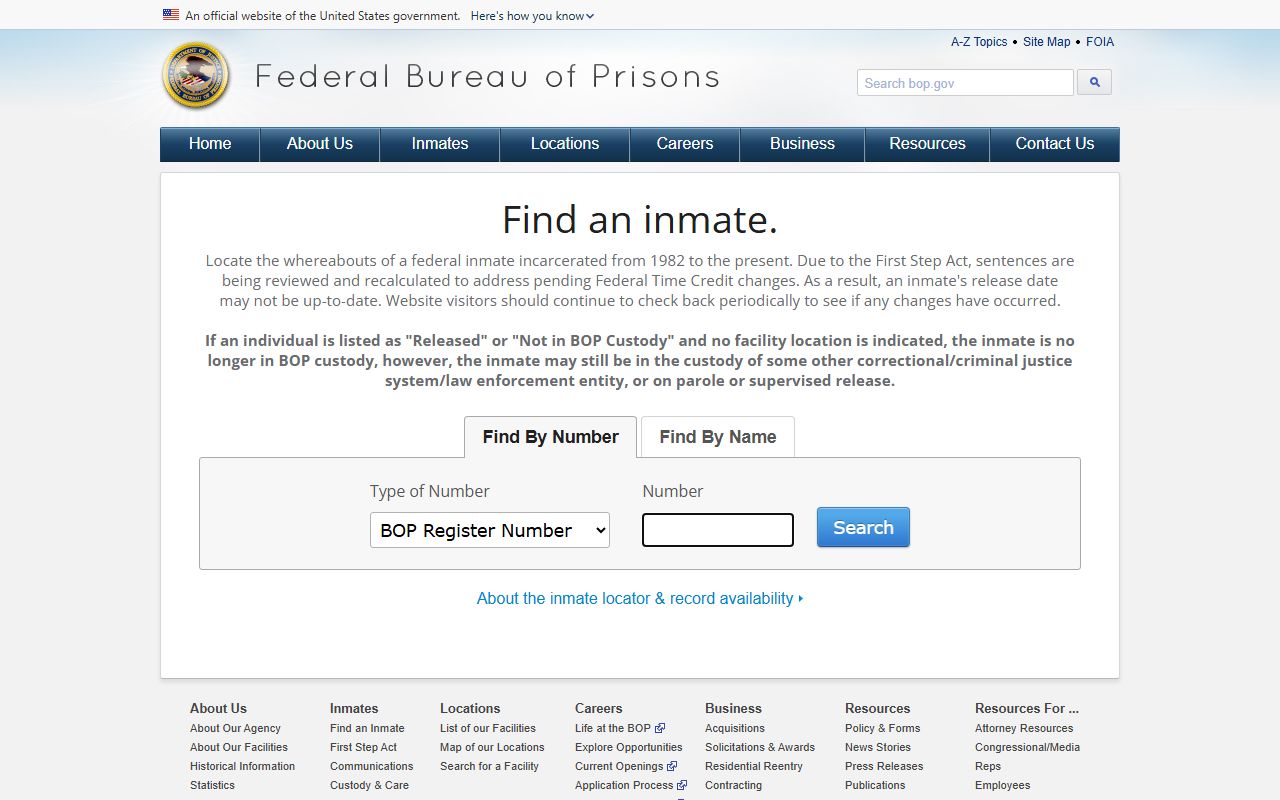
Avoid third-party aggregator population numbers, which are not official and can be out of date. Use the state and county sources instead.
When you cite a figure, note its level and date. A county monthly count, a state total, and a national rate answer different questions, and mixing them creates a false picture. Marking each number as county, state, or national, with the report date, keeps the comparison honest and lets a reader trace it back to the official source.